Jam Kamal Khan to Pitch Pakistan Investment at 11th Belt and Road Summit
Pakistan’s Commerce Minister Jam Kamal Khan is set to lead a high-profile delegation to Hong Kong this week for the 11th Belt and Road Summit, as Islamabad intensifies efforts to attract foreign direct investment and expand trade linkages under China's multi-billion-dollar global infrastructure initiative.
The commerce ministry confirmed on Tuesday that Khan will visit Hong Kong from September 8–11, where he will represent Pakistan at one of the most significant annual gatherings under the Belt and Road Initiative (BRI). This year's summit is expected to draw nearly 100 policymakers, business leaders, and investors from across Asia, the Middle East, and beyond, with a particular focus on deepening cooperation with ASEAN nations, Central Asian republics, and Gulf economies.
According to an official statement released by the commerce ministry, "The minister will deliver a special address, participate in key summit sessions and hold high-level meetings with senior leaders and officials from Hong Kong and various other countries." The itinerary also includes engagements with business organizations, potential investors, and members of the Pakistani diaspora community in Hong Kong, aimed at promoting bilateral trade, securing investment commitments, and strengthening Pakistan's broader economic relationships with international partners.
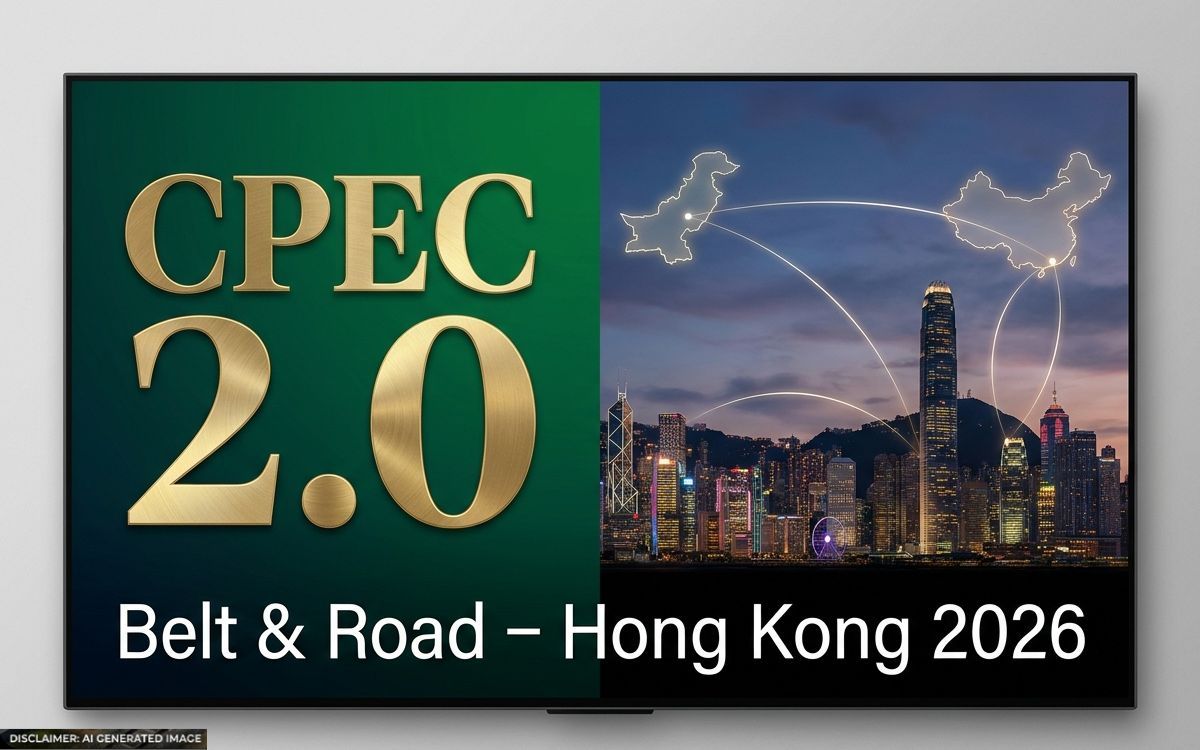
The two-day summit, commencing Wednesday, features discussion tracks covering infrastructure financing, digital innovation, cross-border trade facilitation, sustainable development, and technology transfer—all core pillars of the BRI's evolving agenda. Over the years, the annual gathering has increasingly functioned as a deal-making platform, connecting government representatives with private-sector stakeholders seeking project-level partnerships and joint ventures.
For Pakistan, the stakes are particularly high. As one of the largest beneficiaries of Chinese infrastructure investment under the BRI—primarily through the China-Pakistan Economic Corridor (CPEC), launched over a decade ago—Islamabad has already seen substantial upgrades to its power generation capacity, road networks, port infrastructure, and logistics corridors. However, with the first phase of CPEC largely focused on energy and transport mega-projects, both Pakistan and China are now pivoting toward what Islamabad terms "CPEC 2.0."
This new phase envisions a shift toward industrialization zones, agricultural modernization, green energy solutions, IT-enabled services, and—crucially—private-sector-led investment. The Hong Kong summit provides a timely platform for Khan to articulate this vision, reassure foreign investors of policy consistency, and showcase emerging opportunities in special economic zones, technology parks, and export-oriented manufacturing clusters.
Analysts view the minister's participation as a strategic move to diversify Pakistan's investment base beyond traditional state-backed financing, particularly as the country navigates balance-of-payments challenges and seeks to unlock private capital for priority infrastructure projects. The timing also aligns with broader regional realignments, as BRI partners increasingly look toward ASEAN and Central Asia for supply chain diversification and new trade routes.
Khan's engagements in Hong Kong are expected to build on recent bilateral momentum, including high-level talks between Pakistani and Chinese officials on fast-tracking CPEC 2.0 projects. The summit also offers an informal setting for sideline discussions on regulatory reforms, visa facilitation, and dispute resolution mechanisms—all critical enablers for sustained foreign investment.
As the summit unfolds, all eyes will be on whether Pakistan can translate ministerial-level diplomacy into tangible investment memoranda and project commitments, particularly in sectors where Hong Kong-based financial institutions and logistics firms possess deep expertise. For a country eager to reposition itself as a regional trade and transit hub, the Hong Kong Belt and Road Summit represents not just a diplomatic routine, but a pivotal opportunity to write the next chapter of its economic partnership with China and the wider BRI community.