Pakistan Pitches CPEC Phase II to Global Investors at Belt and Road Summit
Federal Minister for Commerce Jam Kamal Khan, addressing the 11th Belt and Road Summit in Hong Kong, reaffirmed Pakistan's strong commitment to the Belt and Road Initiative (BRI) while showcasing the country's expanding role as a regional hub for trade, investment, and connectivity.
The Minister expressed immense pride in the China-Pakistan Economic Corridor (CPEC), describing it as a transformative force reshaping Pakistan's economic landscape through enhanced cooperation in infrastructure, energy, and industrialisation. He emphasised that CPEC is positioning Pakistan as a major connectivity hub by linking landlocked Central Asia and Western China with warm-water ports and international markets. "Pakistan is emerging as a vital bridge between West, Central, and East Asia," Jam Kamal Khan stated, pointing to expanding rail and road links with China and transit-trade arrangements with neighbouring Central Asian states.
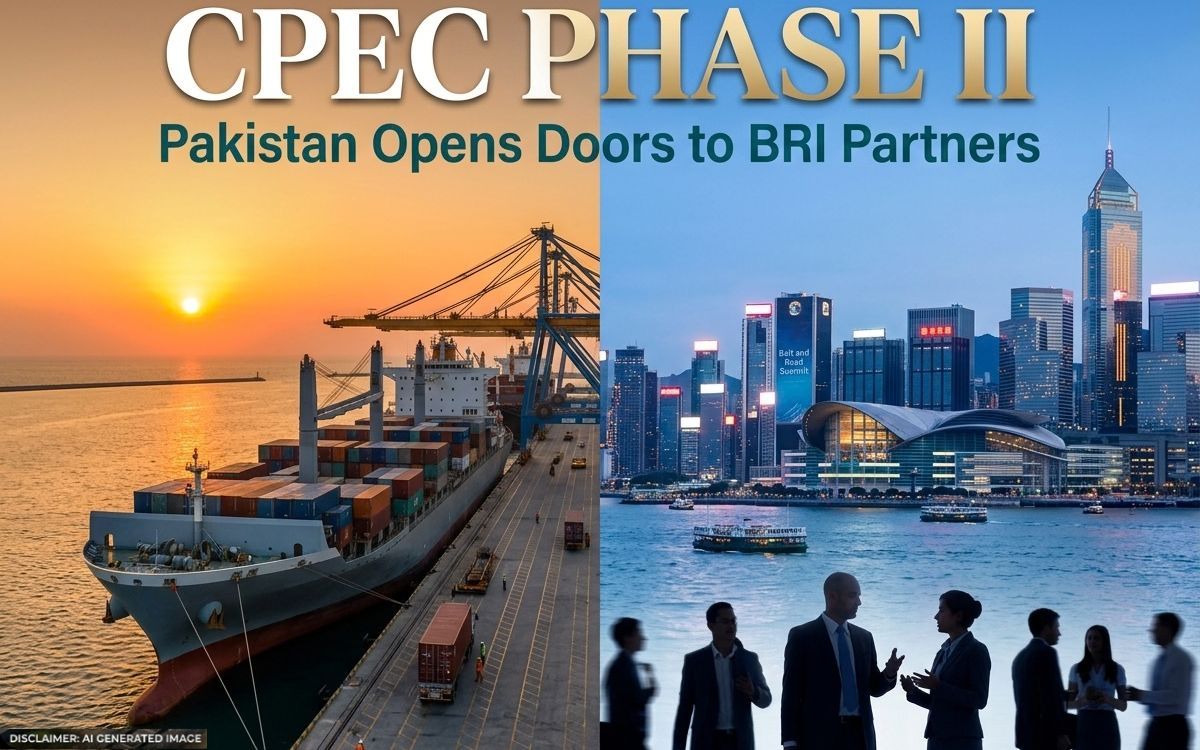
He noted that these connections open access to a vast regional market of approximately 1.5 billion people. Port reforms, digital customs systems, and modern logistics are reducing costs and transit times, reinforcing Pakistan's potential as an emerging transshipment hub. The Minister observed that regional cooperation is undergoing a structural transformation, moving beyond transport corridors toward integrated value chains. He stressed the importance of embedding digital innovation, sustainability, and skilled employment into the regional trade architecture to ensure inclusive, people-centred prosperity.
Highlighting Pakistan's improving economic outlook, Jam Kamal Khan said greater macroeconomic stability, fiscal discipline, and improved credit ratings have strengthened investor confidence. Renewed investment in energy, infrastructure, mining, and industry reflects growing international trust in Pakistan's economic potential. He outlined an economic strategy centred on export-led growth, industrial modernisation, investment facilitation, and regulatory reforms, with emphasis on value addition and deeper integration into global value chains. "We are focused on developing traditional sectors such as textiles and agro-processing alongside knowledge-based manufacturing and services," the Minister said. He also underscored Pakistan's agricultural potential, noting that climate-smart practices, modern seed technologies, and improved supply chains could strengthen food security and boost export earnings.
The Minister invited international investors to explore opportunities in Pakistan's mineral sector, including copper, coal, and other industrial and critical minerals, under transparent and investor-friendly frameworks. Turning to Pakistan's young and growing population, he described it as one of the world's largest reservoirs of human capital, noting that annual remittances of around $40 billion reflect the skills, resilience, and global credibility of Pakistan's overseas workforce. He urged BRI partners to capitalise on emerging opportunities under CPEC Phase II, particularly in industrialisation, agriculture, mining, energy, technology, and export-oriented production.
Jam Kamal Khan also highlighted Pakistan's potential for religious, cultural, and nature-based tourism, citing towering mountain peaks, scenic valleys, and ancient Buddhist, Sikh, and Sufi heritage sites as diverse attractions for tourists and hospitality investors. Addressing global challenges, he identified artificial intelligence, cybersecurity risks, and climate-induced food insecurity as major concerns, noting that Pakistan is modernising its digital infrastructure while promoting climate-smart agriculture, green industries, and renewable energy. As a climate-vulnerable country, Pakistan seeks deeper cooperation with BRI partners, including Hong Kong, in climate adaptation, technological resilience, and sustainable development.
The Minister stressed the importance of people-to-people contacts, student exchanges, and cultural interaction in building lasting partnerships, and appreciated Hong Kong's initiative to extend around 150 Belt and Road scholarships to students from partner countries. He commended Hong Kong Chief Executive John Lee for strengthening economic engagement across Central and South Asia and extended an invitation for him to visit Pakistan. Concluding his address, the Minister reaffirmed Pakistan's commitment to connecting the BRI with South and Southeast Asia and promoting business, investment, regional integration, and inclusive development. "We look forward to working jointly with our partners to unlock new opportunities and achieve long-term, high-quality, and inclusive prosperity," he said.