Pakistan Seeks Faster Progress on $1.8 Billion Karakoram Highway Project
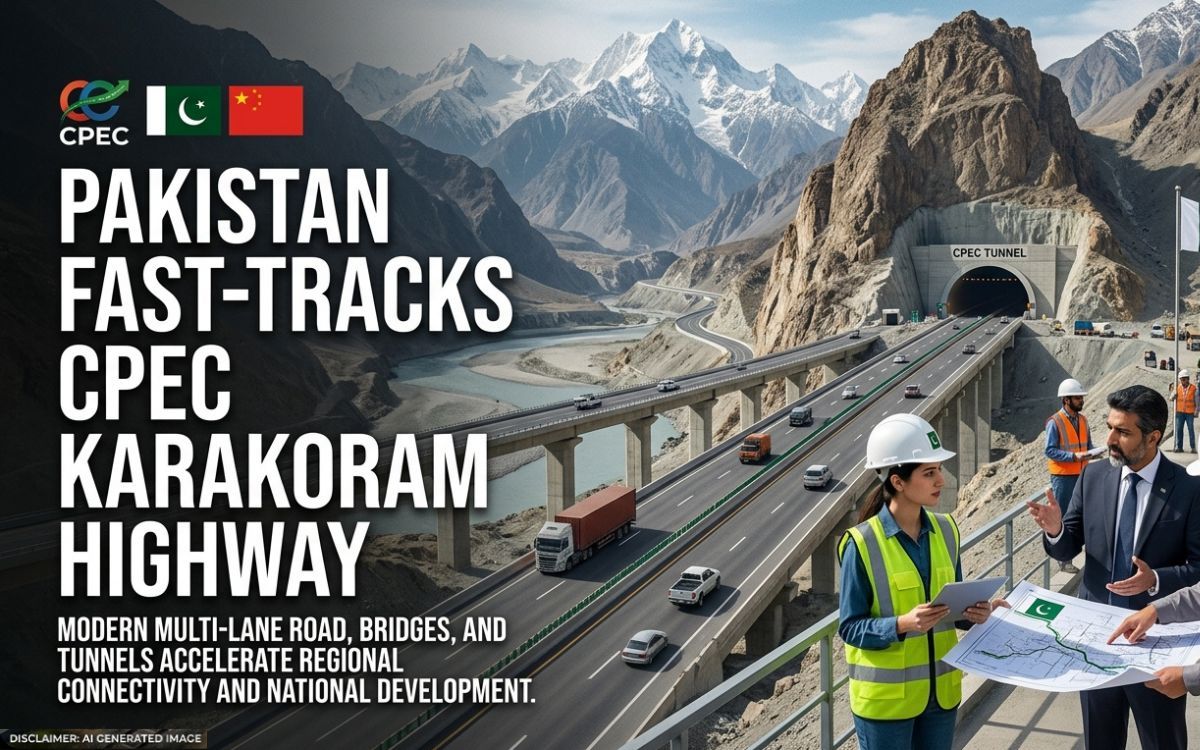
Pakistan is considering financing a major $1.8 billion Karakoram Highway project from its own resources while also seeking China's approval to allow leading local construction companies to participate in the bidding process. The move is intended to accelerate work on one of the most important transport projects under the China-Pakistan Economic Corridor (CPEC).
The proposal is expected to be discussed during the upcoming Joint Technical Working Group meeting in Beijing later this month, where officials from both countries will review the project's financing and implementation strategy. Planning Minister Ahsan Iqbal recently chaired a meeting to assess progress and discuss measures to avoid further delays.
Pakistan plans to request amendments to the existing government-to-government agreement, which currently restricts bidding to three Chinese companies. By opening the process to qualified Pakistani contractors, the government aims to enhance competition, reduce project costs, and speed up construction.
The planned 280-kilometre highway is considered critical because sections of the existing Karakoram Highway are expected to be submerged by May 2028 following the completion of the Diamer Bhasha Dam. The replacement route is therefore essential to maintain uninterrupted connectivity between northern Pakistan and the rest of the country.
The project is currently estimated to cost around Rs502 billion (approximately $1.8 billion), with the first phase requiring Rs320 billion under the joint feasibility study. However, Planning Ministry officials believe the first phase cost could be reduced by nearly 35 percent, bringing it down to around Rs208 billion, if the project is executed using local construction standards, National Highway Authority (NHA) rates, and domestic contractors. Updated cost estimates under this approach are now being prepared.
Pakistan and China had previously agreed in principle that China would finance 85 percent of the project's cost, while Pakistan would provide the remaining share. However, the final financing agreement has yet to be concluded. Pakistani officials have continued discussions with their Chinese counterparts, while Beijing has proposed reviewing project costs and financing details during the forthcoming technical meeting.
Planning Minister Ahsan Iqbal expressed optimism that both sides would reach a financing agreement during the Beijing talks. At the same time, he emphasized that if funding arrangements continue to face delays, Pakistan is prepared to begin construction using domestic resources to ensure the replacement highway is completed before the existing route becomes unusable.