$1 Billion AI Fund Backed by PCJCCI to Transform Pakistan’s Economy
The Pakistan-China Joint Chamber of Commerce and Industry has expressed strong support for the government’s proposed $1 billion artificial intelligence (AI) fund, highlighting its potential to reshape Pakistan’s economic future when combined with China-Pakistan Economic Corridor (CPEC) 2.0. The chamber believes that aligning advanced technologies with large-scale infrastructure initiatives can significantly strengthen the country’s digital economy.
According to PCJCCI, the initiative comes at a critical moment, as Pakistan’s demographic profile presents a unique opportunity. With nearly 63% of the population comprising youth, the country holds significant potential to transition towards a technology-driven economy. PCJCCI President Nazir Hussain emphasised that this demographic advantage can only be realised through targeted investment in digital skills and innovation.
He described the AI fund as a timely and strategic move capable of enhancing governance frameworks, fostering innovation, and creating new economic opportunities for young people. Integrating emerging technologies into national development planning, he noted, is essential for achieving long-term, inclusive, and sustainable growth.
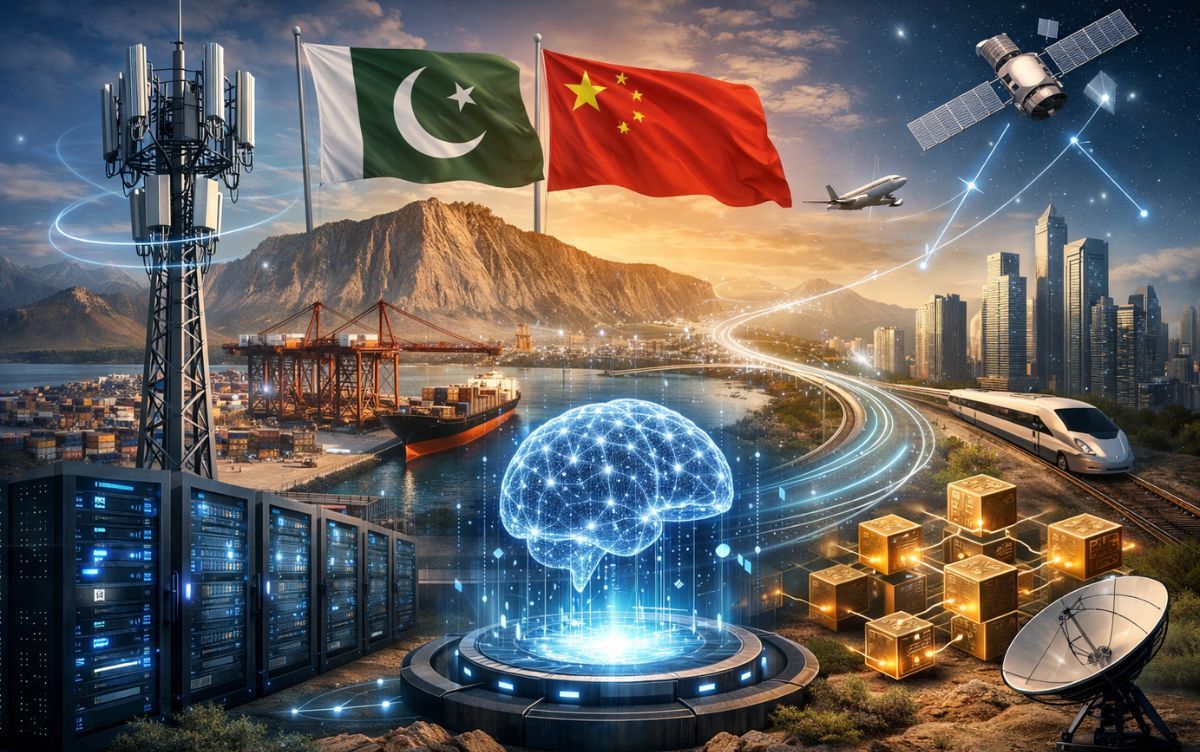
The proposed initiative outlines a comprehensive roadmap for developing Pakistan’s AI ecosystem. Key measures include the introduction of AI education in federally administered schools, the provision of 1,000 fully funded PhD scholarships by 2030, and large-scale training programmes aimed at equipping one million non-IT professionals with AI-related skills. This approach is designed not only to prepare future talent but also to upskill the existing workforce to meet evolving technological demands.
PCJCCI officials stressed that extending AI training beyond the IT sector could significantly boost productivity across traditional industries. By enabling workers to adapt to technological changes, the programme aims to improve livelihoods while strengthening the country’s broader economic base. The chamber views this initiative as a foundational step toward building a nationwide technology framework.
Highlighting global trends, the chamber referenced estimates from the International Monetary Fund, which suggest that digital economies in developing countries can grow two to three times faster than traditional sectors. Despite this potential, Pakistan currently contributes less than 1% to global AI research output, indicating considerable room for expansion with the right investments and institutional support.
Experts also point to Pakistan’s growing digital infrastructure as a key advantage. Rapid expansion in mobile internet usage — surpassing 200 million users in early 2026 — provides a strong foundation for digital adoption. However, analysts caution that sustainable progress will depend on developing local datasets, nurturing domestic talent, and focusing on solutions tailored to local challenges.
PCJCCI further linked the AI fund with the broader vision of CPEC 2.0, noting its alignment with the government’s Uraan Pakistan programme. This initiative prioritises export growth, affordable energy, operational efficiency, and environmental sustainability — all of which can be enhanced through advanced technological integration.
The chamber believes that the convergence of these policy directions can strengthen Pakistan’s economic resilience and improve its competitiveness in global markets. It also highlighted China as a natural partner in this transformation, given its global leadership in artificial intelligence and expected investment of $125 billion in the AI sector by 2026.
Through public-private partnerships and continued collaboration under CPEC, PCJCCI aims to promote technology transfer, joint research, and infrastructure development. These efforts are expected to play a critical role in advancing Pakistan’s transition toward a modern, innovation-driven economy.