CPEC 2.0: Agriculture Innovation Takes Center Stage as Minister Urges Project Formulation
Minister for National Food Security and Research Rana Tanveer Hussain has called upon agricultural scientists and researchers to develop focused and innovative projects under the second phase of the China-Pakistan Economic Corridor (CPEC 2.0). The Minister made these remarks while addressing a vaccine handover ceremony held at the National Agricultural Research Center (NARC) in Islamabad on Wednesday.
Speaking on the occasion, Rana Tanveer emphasized that agriculture would serve as a cornerstone of the mega initiative, with the overarching goal of enhancing productivity, modernizing the sector, and strengthening Pakistan's economic foundation. He highlighted that the enduring strategic partnership between Pakistan and China continues to yield tangible benefits, with the livestock sector alone constituting a substantial 60 percent of the country's agricultural economy—underscoring its critical importance for rural livelihoods and national food security.
The Minister expressed profound gratitude to the Chinese government, its Ministry of Agriculture and Rural Affairs, and the Chinese Embassy in Pakistan for their generous donation of veterinary vaccines against Lumpy Skin disease and Brucellosis. These diseases, he warned, pose serious threats to animal health, reproduction, and milk production, resulting in heavy economic burdens for smallholder farmers who depend on livestock for their daily sustenance and income.
Highlighting the sector's economic weight, Rana Tanveer noted that livestock contributes significantly to agricultural GDP, provides employment to millions of rural households, and supplies essential commodities including milk, meat, hides, and skins. The protection of this vital sector through disease control measures is therefore non-negotiable for Pakistan's agricultural sustainability.
Under the directives of the Prime Minister, the government is placing paramount focus on boosting agricultural productivity through comprehensive reforms. As part of these efforts, the Chinese Academy of Agricultural Sciences has been engaged to provide recommendations for modernizing premier research institutions like the Pakistan Agricultural Research Council (PARC). Implementation of these recommendations is slated to begin over the next two to three months, marking a significant step toward institutional capacity building.
Reiterating Pakistan's commitment to leveraging China's advanced expertise in agricultural science, technology, and disease control, the Minister announced that 1,000 Pakistani students have already returned to the country after acquiring practical knowledge and hands-on training in China. These trained professionals are now being integrated into various agricultural sectors across the country. Furthermore, the process to send an additional 1,000 students to China is already underway and is expected to be completed by March next year, ensuring a continuous pipeline of skilled human capital for the agriculture sector.
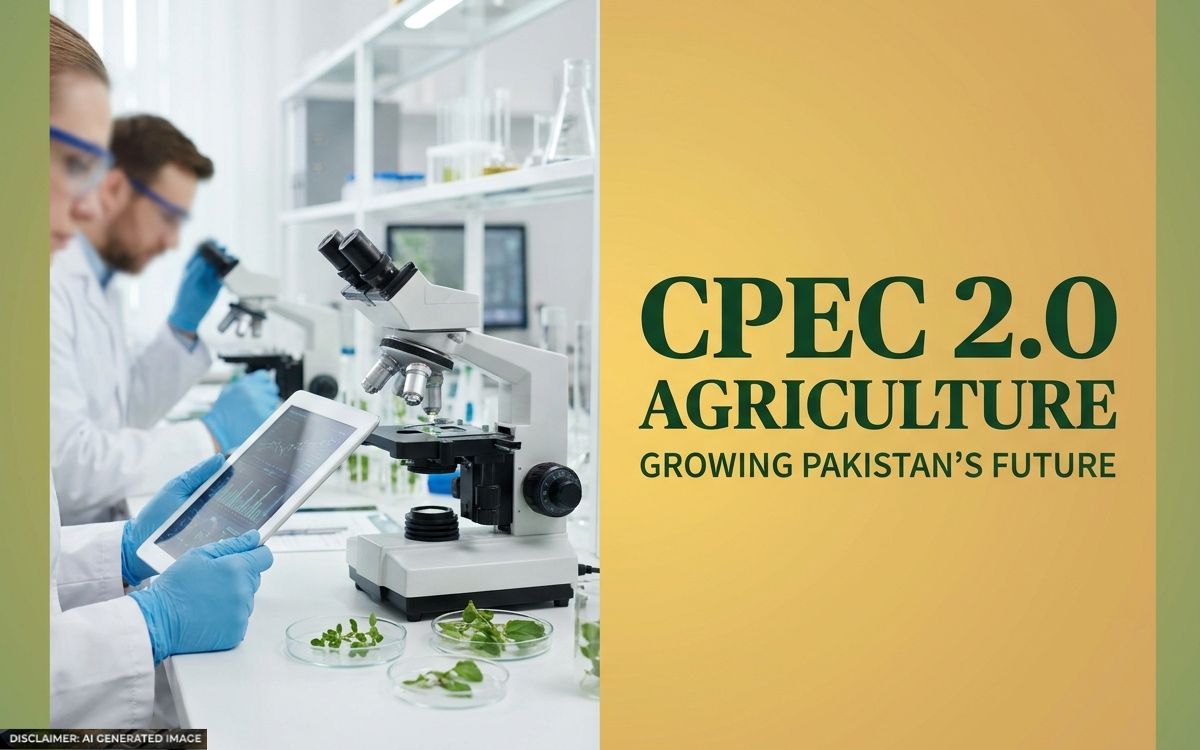
Turning to the bilateral frameworks, Rana Tanveer stressed that agriculture forms a major component of the second phase of the China-Pakistan Economic Corridor. He urged PARC scientists and researchers to formulate targeted, actionable projects that can maximize developmental benefits from CPEC 2.0, ensuring that the sector fully capitalizes on the opportunities presented by this transformative partnership.
The Minister assured that the donated vaccines will be administered efficiently under strict regulatory guidelines, with proper cold-chain management and effective monitoring systems in place. He commended the collaborative efforts of Pakistani and Chinese officials, scientists, and veterinary teams in making the NARC field demonstrations and vaccine rollout a resounding success.
As CPEC 2.0 continues to unfold, the agriculture sector stands poised to benefit immensely from enhanced research collaboration, technology transfer, and capacity building. With the government's renewed focus and the scientific community's active engagement, Pakistan's agricultural transformation under the CPEC framework appears set to deliver lasting economic and social dividends.