Gilani Calls for Turning CPEC-II Opportunities into Economic Gains
Senate Chairman Yousuf Raza Gilani on Sunday urged stakeholders to translate the opportunities presented by the second phase of the China-Pakistan Economic Corridor (CPEC) into tangible economic benefits, including increased investment, job creation, and improved living standards for the people of Pakistan.
Speaking at the inauguration ceremony of the Pakistan-China Research Centre for Party and State Governance, where he formally accepted its honorary chairmanship, Gilani identified agriculture, industrial development, information technology, innovation, green growth, and regional connectivity as priority areas for cooperation between the two nations. He emphasised that Pakistan-China cooperation should extend beyond longstanding diplomatic ties to deliver practical economic and institutional benefits, pledging to promote parliamentary cooperation, policy research, institutional exchanges, and mutual learning.
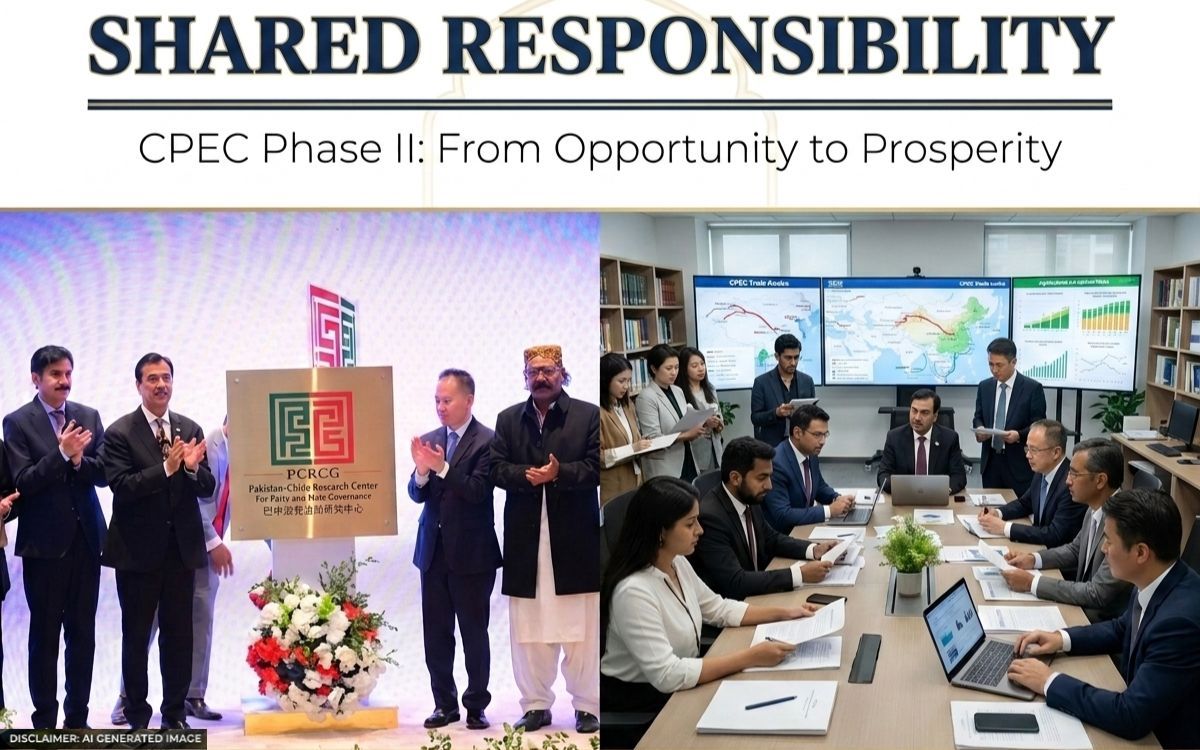
The centre, established by the Pakistan-China Economic and Cultural Council (PCECC), will provide a platform for scholars, universities, think tanks, policymakers, and parliamentary forums from both countries to exchange ideas and experiences. Gilani noted that the institution could help bridge the gap between academic research and policymaking while strengthening links between the two countries' institutions. He added that he would encourage engagement with parliamentary institutions and exchanges involving parliamentarians, academics, and younger generations.
Welcoming Liu Haixing, Minister of the International Department of the Communist Party of China (CPC) Central Committee, and his delegation, Gilani stated that China's experience in governance, institutional development, long-term planning, and economic transformation offered valuable lessons for Pakistan. He cited China's progress in poverty reduction, rural development, digital governance, industrial growth, and public administration as key areas for research and institutional learning.
The Senate, he affirmed, remains committed to strengthening its legislative and oversight functions through informed decision-making and the adoption of effective governance practices. "Our friendship is a legacy, but its future is a shared responsibility," Gilani remarked, underscoring the need for continued collaboration and mutual commitment.
Following the ceremony, the Senate Chairman also visited a photo exhibition documenting the rich history of Pakistan-China relations, further highlighting the deep-rooted ties between the two nations.