EO-2 Satellite Strengthens Pakistan’s Space and Imaging Capabilities
Pakistan has successfully launched its second indigenous Earth Observation satellite, EO-2, from China’s Yangjiang Seashore Launch Center, marking a major milestone in the country’s expanding space ambitions. The launch was confirmed by the national space agency, the Pakistan Space and Upper Atmosphere Research Commission (SUPARCO), which described the mission as a significant achievement in strengthening domestic satellite and remote sensing capabilities.
The EO-2 satellite is expected to enhance Pakistan’s earth observation systems by improving imaging continuity and accuracy across multiple sectors. According to SUPARCO, the mission represents a crucial step toward expanding the country’s satellite fleet while reinforcing its long-term vision of technological self-reliance.
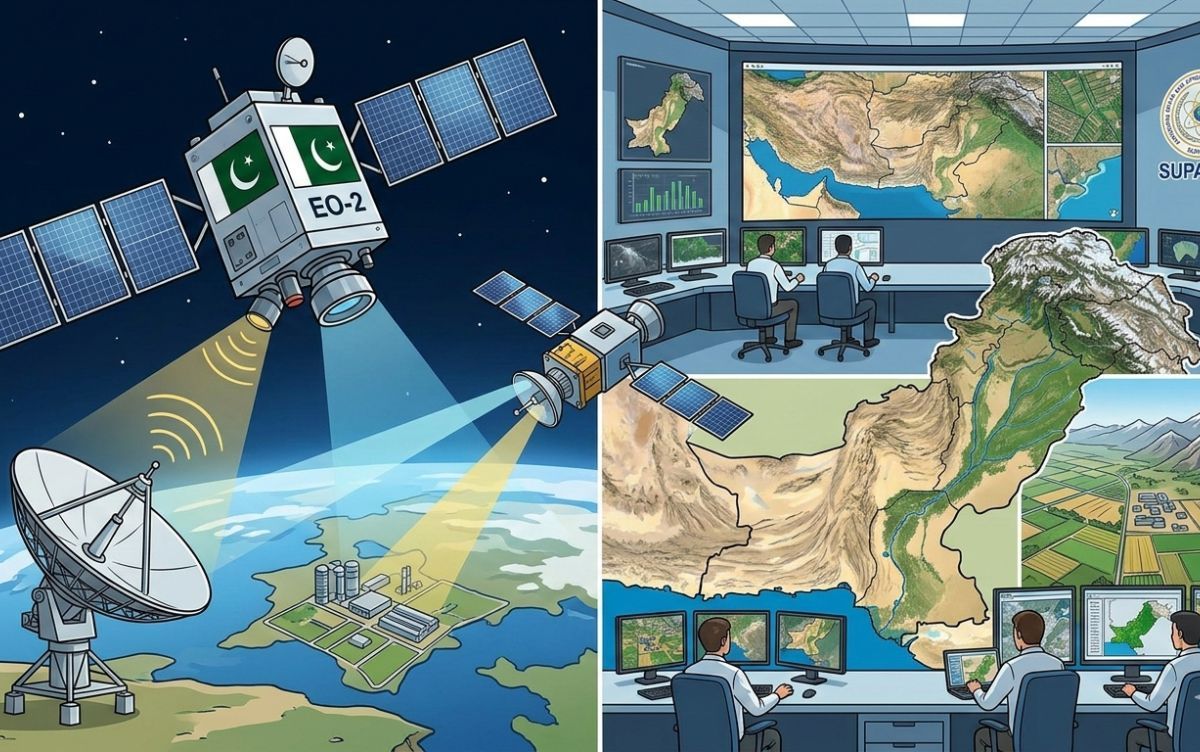
Designed to provide high-quality geospatial imagery and updated data, EO-2 will support a broad range of governance and planning functions. The satellite’s capabilities are expected to improve disaster monitoring, particularly in flood-prone and climate-vulnerable regions, while also contributing to agricultural planning, environmental monitoring and infrastructure development.
In its official statement, SUPARCO emphasized that EO-2 will deliver critical data for national resource management and evidence-based policymaking. The improved availability of satellite imagery is anticipated to assist federal and provincial authorities in urban planning, land-use management and strategic development initiatives.
The successful launch also reflects Pakistan’s steady progress in indigenous satellite development. By advancing locally designed platforms, the country aims to reduce dependence on external data sources and strengthen its national space program through homegrown expertise.
Pakistan has expanded space cooperation with China in recent years, including joint missions and satellite launches. The deployment of EO-2 underscores this collaborative framework while highlighting Islamabad’s commitment to building sustainable technological capacity.
As Pakistan faces increasing climate stress, rapid urbanization and recurring natural disasters, EO-2 is expected to play a pivotal role in enhancing real-time data access and strengthening national resilience through informed planning and improved decision-making.