Pakistan and Russia Deepen Strategic Ties Through INSTC Integration
Pakistan is planning to join the International North-South Transport Corridor (INSTC), while Russia has expressed support for linking the strategic Gwadar Port with the major trade network as both countries work to strengthen economic and strategic cooperation under a new partnership framework extending to 2030.
The development was highlighted by Federal Minister for Energy Sardar Awais Ahmed Khan Leghari during Webinar-1, titled “Pakistan-Russia Bilateral Relationship at the Cusp of Shifting Global Order.” In his keynote address, the minister described Pakistan-Russia relations as entering a highly positive and pragmatic phase, marked by expanding cooperation across multiple sectors.
A significant focus of the discussion was regional connectivity and economic integration. According to an official statement, Pakistan has signalled its intention to become part of the International North-South Transport Corridor, a major multimodal transportation network spanning approximately 7,200 kilometres. The corridor combines maritime, rail and road routes to facilitate the movement of goods between India, Iran, Azerbaijan, Russia, Central Asia and Northern Europe.
Leghari welcomed recent remarks by Russian Deputy Prime Minister Alexey Overchuk supporting the idea of connecting the INSTC with Gwadar Port. Such a linkage would strengthen trade routes across Eurasia while creating a strategic connection with China's Belt and Road Initiative, further enhancing Gwadar’s role as a regional logistics and maritime hub.
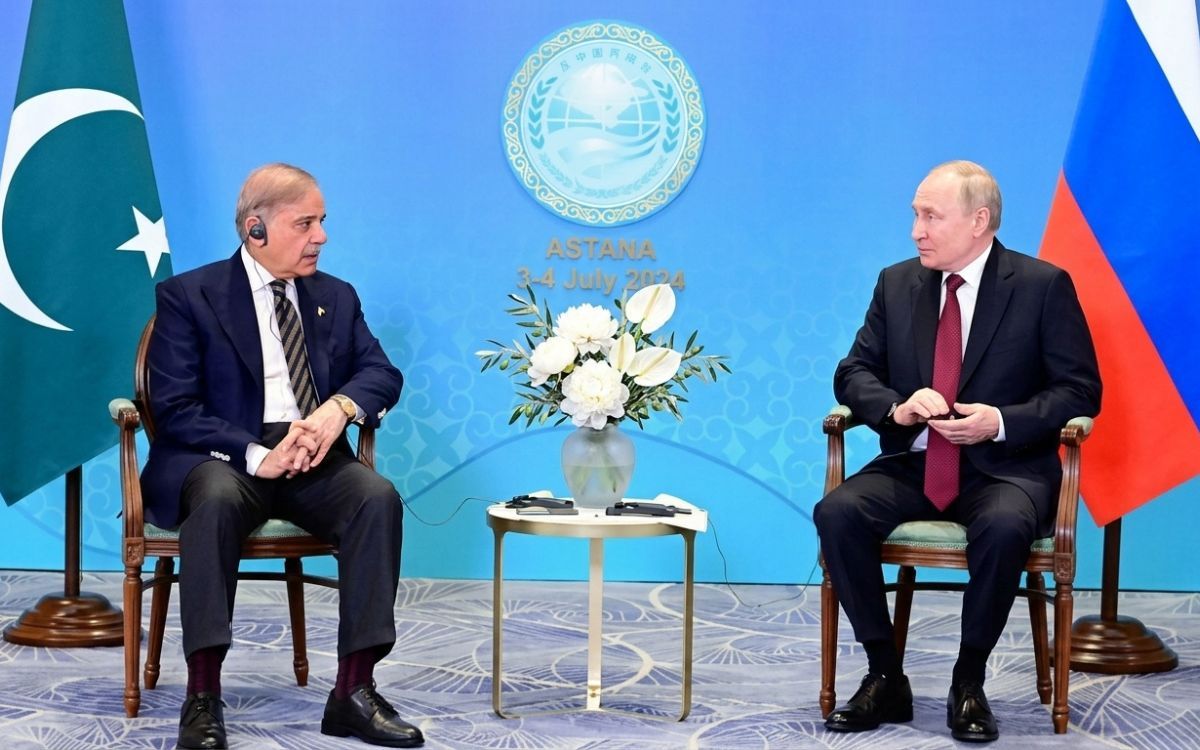
Discussing broader geopolitical developments, the minister noted that historical mistrust dating back to the Soviet era has largely faded, paving the way for a more constructive and cooperative partnership. He said relations between Pakistan and Russia have evolved significantly over the past two decades, transforming from limited engagement to a relationship characterized by growing trust and collaboration in trade, energy, defence and technology.
The minister attributed much of this progress to sustained high-level diplomatic engagement. He highlighted that Prime Minister Muhammad Shehbaz Sharif and Russian President Vladimir Putin have held four meetings in recent years, reflecting the commitment of both countries to strengthening bilateral relations.
As Co-Chairman of the Russia-Pakistan Intergovernmental Commission (IGC), Leghari also emphasized his regular interactions with Russian Energy Minister Sergey Tsivilev. He described the commission as a key platform for advancing cooperation and addressing areas of mutual interest across a broad range of sectors.
Pakistan and Russia have also expanded collaboration through structured mechanisms focused on security, strategic stability and counter-terrorism. Both countries continue to coordinate their positions at international forums, including the United Nations and the Shanghai Cooperation Organisation (SCO), where they advocate for a more inclusive and multipolar global order.
Leghari further noted that Russian leadership has acknowledged Pakistan’s recent diplomatic efforts in helping reduce regional tensions, particularly regarding developments involving Iran and the United States. Such recognition, he said, reflects Pakistan’s growing role as a responsible stakeholder in international affairs.
To unlock the full potential of bilateral trade and overcome existing challenges, including financial and payment mechanisms, both countries have agreed to sign the Program of Economic Cooperation between the Russian Federation and Pakistan for the Period until 2030. The framework is expected to provide a roadmap for expanding economic engagement and investment opportunities.
In addition, the recent signing of the long-awaited Russia-Pakistan Readmission Agreement in Bishkek is expected to facilitate easier visa processes, encouraging greater business activity and people-to-people exchanges between the two countries.
Concluding his remarks, Leghari reaffirmed that stronger Pakistan-Russia relations will contribute significantly to regional stability, economic integration and the broader vision of Eurasian connectivity, with Gwadar expected to play an increasingly important role in linking regional and international trade corridors.