Pakistan Invites Chinese Industries for Joint Ventures and Investment
rime Minister Muhammad Shehbaz Sharif has invited Chinese companies and entrepreneurs to relocate industries to Pakistan and establish joint ventures with local businesses under what he described as a mutually beneficial “win-win” partnership model for both countries.
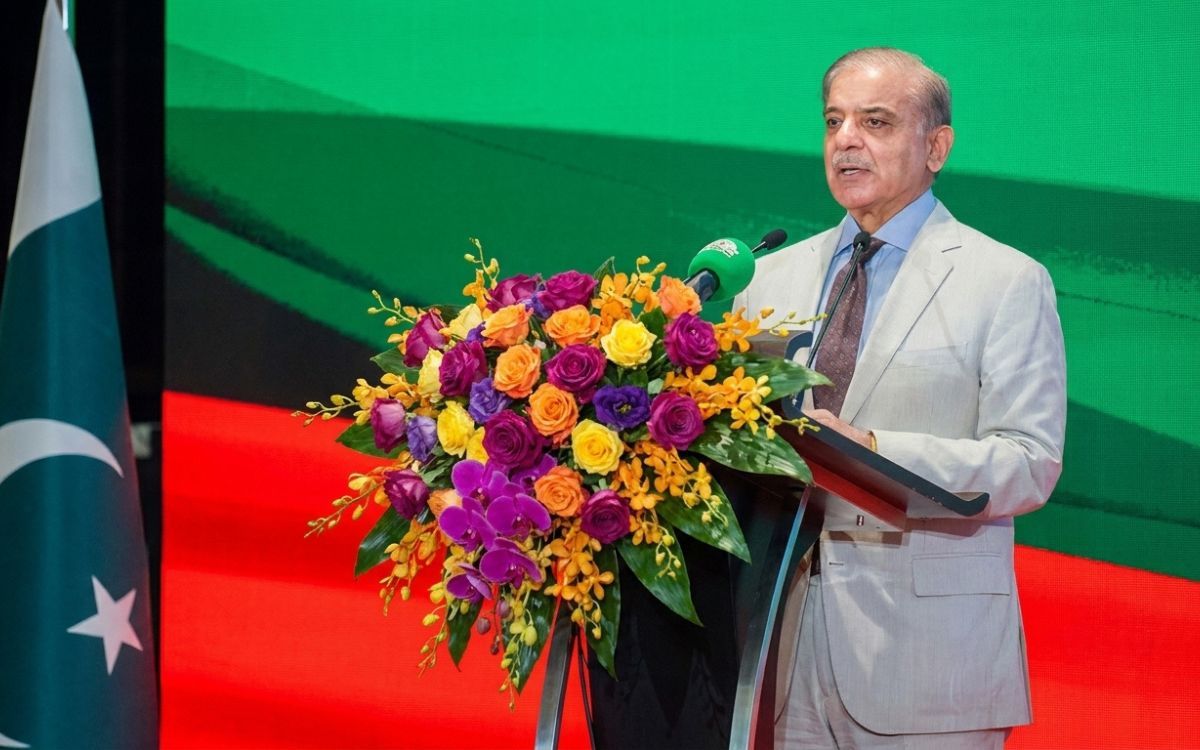
Addressing the Pakistan-China B2B Investment Conference on IT and Telecom, battery energy storage systems (BESS), and agriculture in Hangzhou, China, the prime minister said Pakistan offers significant opportunities for Chinese investors seeking competitive industrial expansion and export-oriented manufacturing.
He noted that rising labour costs in China and the country’s continued shift toward advanced industrialisation had created opportunities for industries to relocate production facilities to Pakistan. He encouraged Chinese firms to bring machinery, technology, and expertise to Pakistan while collaborating with Pakistani entrepreneurs to manufacture products for export to global markets.
Prime Minister Shehbaz Sharif stated that sectors including textiles, leather, information technology, agriculture, and manufacturing could greatly benefit from enhanced bilateral cooperation. He emphasized that such collaboration would deliver long-term economic gains for both Pakistan and China.
The prime minister also invited Chinese investors to explore Pakistan’s export zones, particularly in Karachi, where the government is developing modern special economic zones aimed at facilitating foreign investment through investor-friendly policies and streamlined operations.
Highlighting Pakistan’s vast mineral resources, he said the country possesses major reserves of minerals and gemstones that present strong investment potential for Chinese businesses interested in mining and resource development.
Speaking about agriculture, the prime minister described Pakistan as an agrarian economy with enormous untapped potential. He shared that Pakistan had recently sent 1,000 young graduates to China for advanced agricultural training, enabling them to introduce modern farming techniques, mechanization, and improved agricultural practices back home.
He stressed the importance of increasing agricultural productivity through high-quality seeds, advanced farming methods, and technology transfer. Referring to China’s massive agricultural imports exceeding $100 billion annually, the prime minister said Pakistan currently holds only a small share and could significantly increase exports through deeper cooperation with China.
According to the prime minister, enhanced agricultural collaboration could create extensive employment opportunities in rural Pakistan while supporting the growth of small and medium enterprises involved in value-added agricultural production and exports.
He expressed confidence that Pakistan’s agricultural exports to China could increase by nearly $10 billion within the next five to seven years through strategic partnerships and market-focused production.
Prime Minister Shehbaz Sharif also highlighted the growing importance of IT and artificial intelligence, stating that Pakistan’s youthful population provides a strong foundation for digital innovation and technology-driven economic growth. He said federal and provincial governments are actively training young people and equipping them with internationally recognized certifications to improve employment opportunities.
Discussing Pakistan’s special economic zones, the prime minister revealed plans for a major economic zone in Karachi covering more than 6,000 acres, where modern infrastructure, essential facilities, and a seamless business environment would be provided for investors.
He assured Chinese investors that Pakistan would offer long-term land leases on attractive terms along with one-window operations and red-carpet facilitation to support business activities and industrial partnerships.
The prime minister clarified that Pakistan seeks investment, expertise, technology transfer, and industrial cooperation rather than financial aid or loans. He emphasized that sustainable economic growth can only be achieved through productive partnerships and industrial development.
Referring to Pakistan-China relations, Prime Minister Shehbaz Sharif described the friendship between the two countries as historic and enduring, tracing back to the ancient Silk Road. He praised Chinese President Xi Jinping’s leadership and acknowledged China’s transformation into a leading global economic and technological power.
He also noted that several memorandums of understanding worth billions of dollars had been signed during recent engagements in Shenzhen and Hangzhou, adding that many of these agreements were already moving toward implementation.
The conference was attended by Deputy Prime Minister and Foreign Minister Mohammad Ishaq Dar, Governor of Zhejiang Province, Minister for IT and Telecommunication Shaza Fatima Khawaja, Minister for Information and Broadcasting Attaullah Tarar, Minister for National Food Security Rana Tanveer Hussain, Special Assistant Haroon Akhtar, Pakistan’s Ambassador to China Khalil Hashmi, and senior business leaders from both countries.
The event concluded with the signing of several agreements and business pacts between Pakistani and Chinese companies aimed at strengthening cooperation across multiple sectors including industry, agriculture, technology, and trade.