Pakistan and China Explore Pharma and Biotech Cooperation Through CPEC 2.0
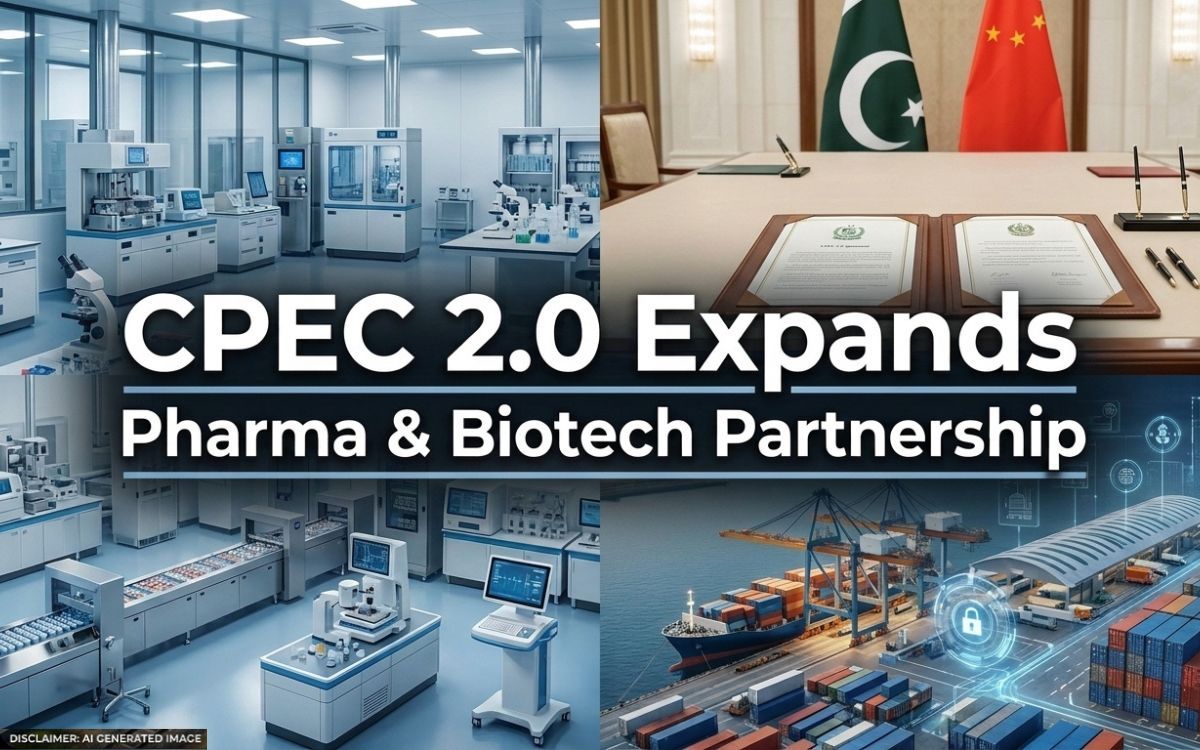
Pakistan is seeking to broaden the scope of CPEC 2.0 by expanding cooperation with China into the pharmaceutical and biotechnology sectors, reinforcing efforts to diversify bilateral collaboration beyond infrastructure and accelerate sustainable economic growth.
As part of this vision, Pakistan aims to strengthen partnerships in pharmaceutical manufacturing, healthcare innovation, biotechnology, and technical skills development through closer engagement with Chinese institutions and industry leaders. The initiative reflects the evolving priorities of the second phase of the China-Pakistan Economic Corridor, which focuses on industrial development, agriculture, information technology, special economic zones, and human capital.
To advance these objectives, the Embassy of Pakistan in Beijing hosted a Technical and Vocational Education and Training (TVET) Symposium on Pharmaceuticals, Healthcare, and Biotechnology. The event served as a strategic platform to enhance dialogue between stakeholders and prepare for the upcoming Pakistan–China B2B Investment Conference on Pharmaceuticals, Healthcare and Biotechnology, scheduled to take place in Karachi from July 17 to 19.
Pakistan's Ambassador to China, Khalil Hashmi, highlighted plans to integrate leading Chinese TVET institutions into the investment conference while organizing a dedicated TVET Partnership Forum alongside the event. The proposed forum is expected to strengthen cooperation in vocational education, workforce development, technology transfer, and investment facilitation under CPEC 2.0.
Addressing participants virtually, Planning Minister Ahsan Iqbal emphasized the importance of establishing joint training programs, promoting collaboration between universities and industries, and creating Pakistan-China Centers of Excellence. He noted that these initiatives would help develop a highly skilled workforce capable of supporting the growing pharmaceutical, healthcare, and biotechnology industries while enhancing Pakistan's industrial competitiveness.
Representing China's Ministry of Human Resources, Zhang Junhua announced that five leading Chinese technical institutions specializing in pharmaceutical and healthcare education had been invited to explore collaborative opportunities with Pakistan. Their participation is expected to facilitate knowledge exchange, advanced technical training, and institutional partnerships that support long-term sectoral growth.
CPEC, the flagship project of China's Belt and Road Initiative, has played a significant role in strengthening economic connectivity between Pakistan and China through infrastructure and energy development. Under CPEC 2.0, both countries are expanding cooperation into high-value industries that can generate employment, encourage innovation, and promote sustainable economic development.
While Pakistan has reiterated its commitment to accelerating CPEC implementation, officials continue to address longstanding challenges, including security concerns and administrative delays that have slowed progress on certain projects. Despite these hurdles, both Islamabad and Beijing remain committed to advancing the next phase of the corridor and unlocking new opportunities for strategic economic cooperation.