PNS Hangor Joins Pakistan Navy Fleet, Strengthening Maritime Defence
Pakistan has taken a significant step forward in strengthening its maritime defence capabilities with the arrival of PNS Hangor, the first of eight Hangor-class submarines being acquired through defence cooperation with China. The state-of-the-art diesel-electric attack submarine arrived in Karachi on Thursday, marking a major milestone in the Pakistan Navy’s ongoing modernisation programme.
The induction of PNS Hangor reflects the deep strategic partnership between Pakistan and China and demonstrates the two countries’ commitment to enhancing defence collaboration. As the submarine entered Pakistan’s waters and arrived at the Karachi Dockyard, it symbolised a new chapter in the country’s naval development and maritime preparedness.
According to defence and naval experts, the addition of the Hangor-class submarine will significantly strengthen Pakistan’s maritime security architecture. The vessel is expected to play an important role in safeguarding national interests at sea while contributing to regional stability and maintaining the balance of power in the broader maritime domain.
The Hangor name holds a special place in Pakistan’s naval history. It is associated with the legendary Pakistan Navy submarine that achieved a historic feat during the 1971 conflict by sinking the Indian Navy warship Khukri and damaging another vessel. The naming of the new class of submarines continues this legacy of courage, professionalism and operational excellence.
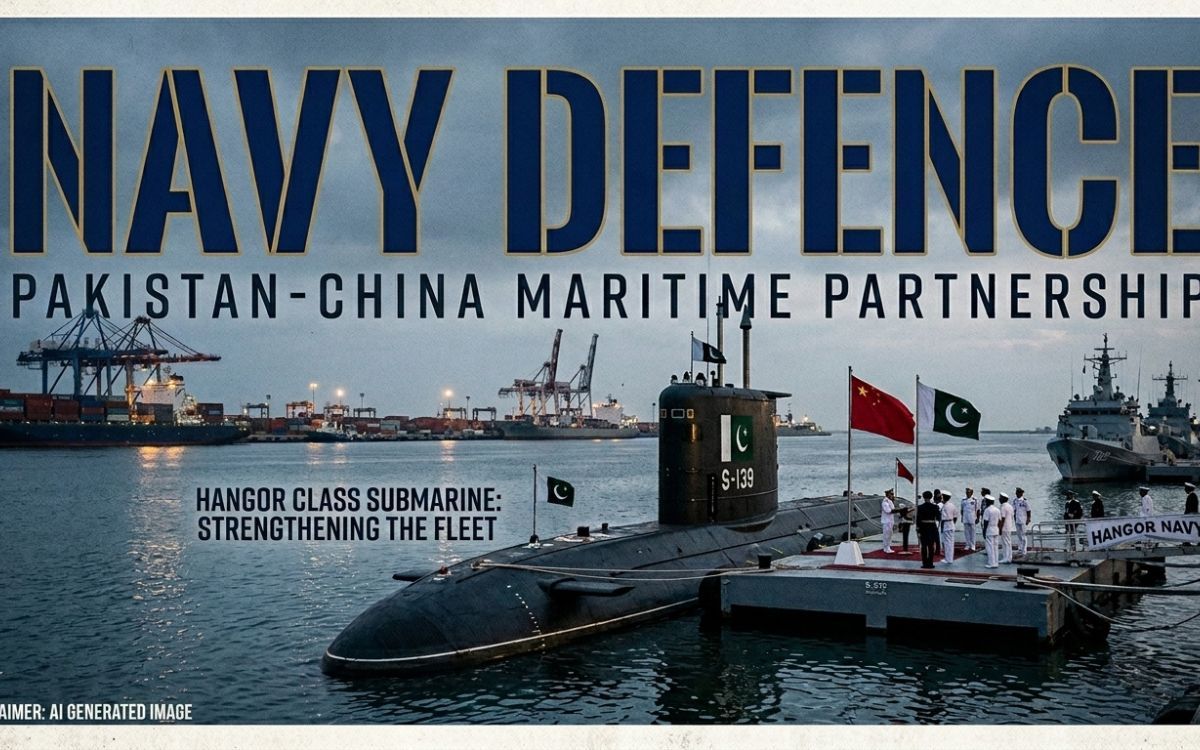
Built in China using advanced naval technologies, the Hangor-class submarine is equipped with modern combat systems, sophisticated sensors, sonar and radar technologies, as well as advanced weapons systems. Its enhanced stealth capabilities enable it to operate with a high degree of concealment, improving survivability and effectiveness in complex operational environments.
A key feature of the submarine is its Air Independent Propulsion (AIP) system, which allows it to remain submerged for extended periods without surfacing frequently. Combined with its advanced stealth design, the system significantly boosts the Pakistan Navy’s operational reach and combat readiness. The submarine is also capable of deploying long-range torpedoes and cruise missiles, further enhancing its strategic capabilities.
A reception ceremony was held at the Pakistan Navy Dockyard to welcome the submarine and its crew. Commander Pakistan Fleet Vice Admiral Abdul Munib attended the event as the chief guest. Senior naval officers, personnel, and families of the crew were also present. Cadets from the Pakistan Naval Academy presented a ceremonial salute, while Pakistan Navy helicopters conducted a fly-past to mark the occasion.
Prior to its arrival in Pakistan, PNS Hangor was commissioned in Sanya, China, on April 30. The commissioning ceremony was attended by President Asif Ali Zardari and Chief of Naval Staff Admiral Naveed Ashraf.
Under an agreement signed between Pakistan and China, a total of eight Hangor-class submarines will be inducted into the Pakistan Navy. Four of the submarines are being constructed in China, while the remaining four are being built domestically at Karachi Shipyard and Engineering Works, supporting the development of Pakistan’s indigenous shipbuilding and defence manufacturing capabilities.
President Asif Ali Zardari congratulated the Pakistan Navy on the induction of the submarine, describing it as an important achievement for the country’s maritime defence. He also appreciated China’s cooperation in the project and reaffirmed Pakistan’s commitment to maintaining peace, stability and strategic balance in the region.
Prime Minister Shehbaz Sharif also welcomed the addition of PNS Hangor to the naval fleet, calling it a major accomplishment in strengthening Pakistan’s maritime security. He stated that the Hangor Submarine Project reflects the enduring friendship and strategic partnership between Pakistan and China while representing an important step towards greater defence capability and self-reliance. The prime minister reiterated the government’s commitment to providing the necessary resources to further enhance the operational readiness of Pakistan’s armed forces.