Pakistan, China Strengthen Strategic Ties with CPEC and Submarine Collaboration
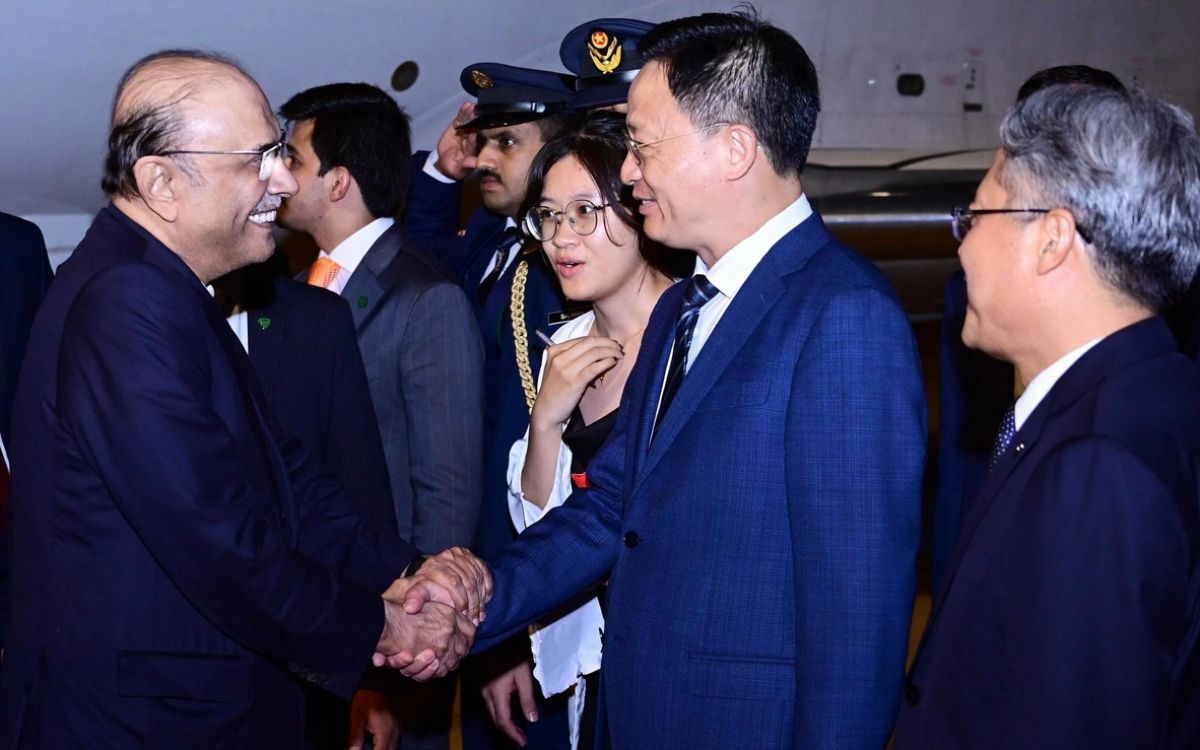
President Asif Ali Zardari arrived in Sanya on Tuesday as part of his ongoing official visit to China, where he is set to engage in high-level discussions with Chinese leadership on a multi-billion-dollar infrastructure and development agenda. The visit also includes participation in the commissioning ceremony of a submarine for the Pakistan Navy, highlighting the growing scope of defence collaboration between the two countries.
China continues to be Pakistan’s most significant strategic partner and a leading investor, with commitments exceeding $65 billion under the China-Pakistan Economic Corridor. This flagship project forms a central component of Xi Jinping’s Belt and Road Initiative and has driven major progress in infrastructure, energy, and connectivity across Pakistan.
The president’s visit began on Saturday, with his initial stop in Changsha, located in Hunan province, where he stayed from April 25 to 27. He later travelled to Sanya in Hainan province, where he is expected to remain until May 1. According to official statements, the visit reflects ongoing high-level exchanges aimed at strengthening bilateral cooperation.
 P.c. Pakistan Today
During his stay in Sanya, President Zardari is scheduled to hold comprehensive discussions with Chinese officials on CPEC-related initiatives, investment opportunities, and broader strategic collaboration. A key highlight of the visit is his participation in the commissioning ceremony of the Pakistan Navy submarine Hangor, marking a significant milestone in defence cooperation.
Pakistan has previously signed an agreement with China for the acquisition of eight Hangor-class submarines. Under this arrangement, four submarines are being constructed in China, while the remaining four will be built domestically at Karachi Shipyard and Engineering Works Ltd. This joint production model is expected to enhance Pakistan’s indigenous defence capabilities while strengthening technological collaboration.
Defence ties between Islamabad and Beijing remain robust, with Pakistan accounting for a substantial share of China’s arms exports in recent years. According to data from the Stockholm International Peace Research Institute, Pakistan represented more than 60 percent of China’s total weapons exports between 2020 and 2024.
The visit comes at a time when Pakistan is actively working to expand its economic and strategic partnerships globally. Alongside strengthening ties with China, the country is also engaging with Gulf nations and Central Asian states to boost trade, investment, and regional connectivity.
In parallel, Islamabad continues efforts to stabilise its economy, supported by a $7 billion programme from the International Monetary Fund. By reinforcing partnerships and advancing infrastructure projects under CPEC, Pakistan aims to drive sustainable growth and long-term economic development.
President Zardari’s visit to China underscores the enduring partnership between the two nations, with renewed focus on infrastructure, defence, and economic cooperation shaping the next phase of bilateral relations.