Pakistan Owes $12M to Iran for Balochistan Electricity Supply, NA Told
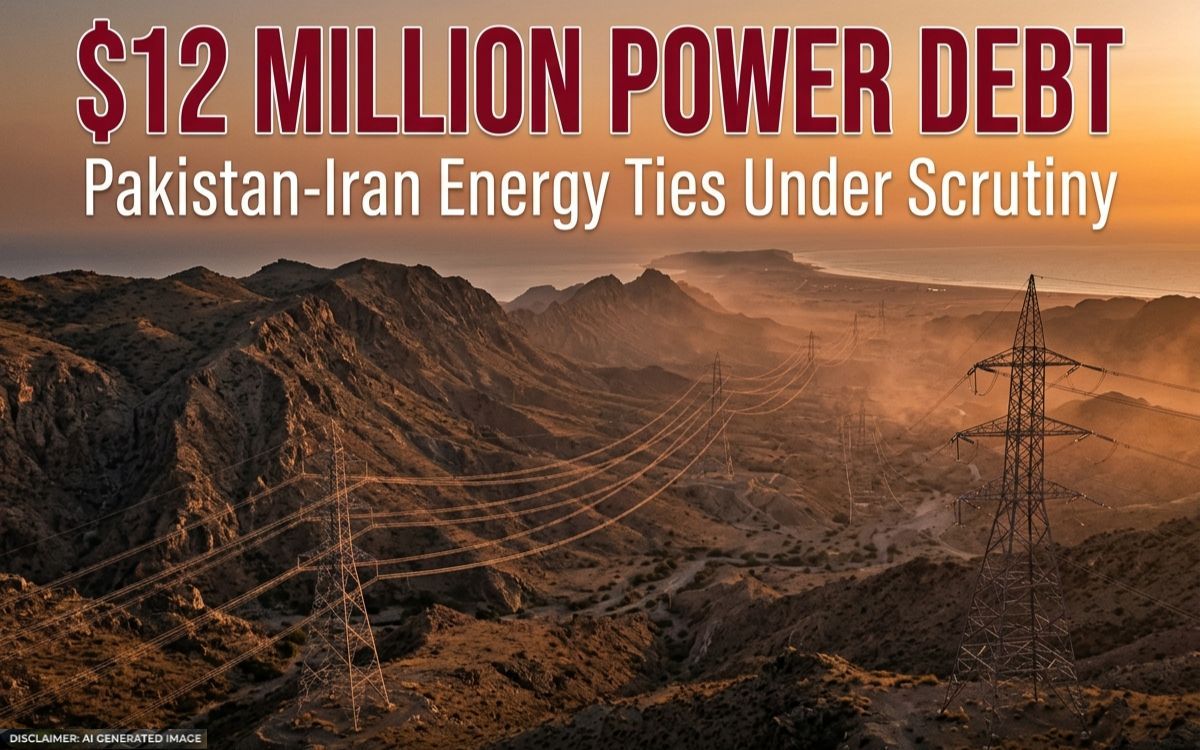
The National Assembly was informed on Thursday that Pakistan currently owes approximately $12 million to Iran's state-owned power utility, Tavanir, for electricity imported to supply parts of southwestern Balochistan, including the Gwadar region.
In a written reply, Energy Minister Awais Leghari stated that Pakistan imports up to 204 megawatts (MW) of electricity from Iran under an agreement signed in November 2002 to supply the Makran region. Under the terms of the agreement, Pakistan is obligated to purchase or pay for 30 million kilowatt-hours of electricity per month, regardless of actual consumption levels.
The contract operates between the Central Power Purchasing Agency (CPPA-G) and Iran's Tavanir, with tariffs approved by the National Electric Power Regulatory Authority (Nepra). The minister noted that the outstanding amount is being settled through instalment payments. The agreement was amended in December 2024 and extended for an additional two years.
Electricity is supplied through four cross-border interconnections serving parts of Kech, Panjgur, Gwadar, Washuk, and Chagai districts. These supply points include Turbat, Panjgur, Tump, Gwadar, Pasni, Ormara, Mashkail, and Taftan, along with surrounding villages. Quetta Electric Supply Company (Qesco) is responsible for billing consumers and collecting payments under Nepra's notified tariffs. Load-shedding continues in the affected areas based on aggregate technical and commercial losses, the minister added.
Although the Makran region has been connected to the national grid, lengthy transmission lines and voltage fluctuations remain significant obstacles to improving electricity supply. A study on installing dynamic equipment, including a static synchronous compensator (STATCOM), to address voltage problems is expected to be completed by September 2027.