Pak-China Developed Hybrid Rice PU-786 Set for Commercial Launch in Pakistan
University of the Punjab has signed an agreement with Pesticon Seeds Pvt Ltd to commercialize a newly developed hybrid rice variety created through collaboration between Pakistani and Chinese researchers. The initiative is expected to enhance Pakistan’s agricultural productivity while strengthening the country’s rice export potential.
The hybrid rice variety is the result of nearly a decade of research and experimentation by scientists at the university. According to experts, the new seed variety can produce around 140 maunds per acre, which is nearly three times the yield of many conventional rice varieties cultivated in the country. This significant increase in productivity could help farmers improve profitability while contributing to national food security.
Under the agreement, Pesticon Seeds will be responsible for importing, marketing and selling the hybrid seed across Pakistan. The company will also manage regulatory approvals, certification processes and commercial distribution of the variety. In return, the university will receive royalties from the sale of the hybrid seed, ensuring continued support for research and innovation in agricultural sciences.
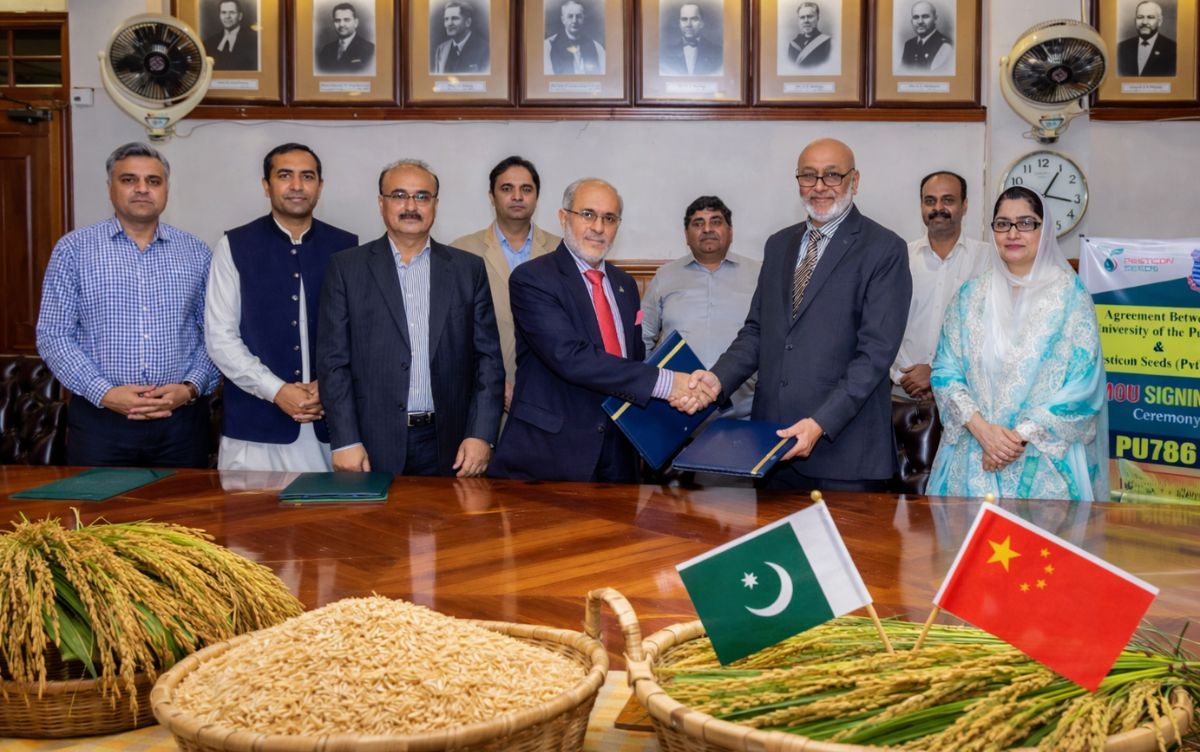
The memorandum of understanding (MoU) was formally signed at the Vice Chancellor’s Office at Punjab University. The ceremony was attended by senior academic and industry representatives, including Pro Vice Chancellor Khalid Mahmood, Pesticon Group Chief Executive Officer Muhammad Shahid and Muhammad Ashfaq, Chairman of the Department of Plant Breeding and Genetics at the university.
According to Prof. Dr. Ashfaq, the hybrid rice variety—named PU-786—has undergone extensive field trials in multiple regions across all four provinces of Pakistan. The testing process demonstrated that the crop performs well under diverse climatic conditions and shows strong resilience against bacterial diseases, extreme heat and pest attacks.
Agricultural experts believe that such hybrid seed technologies can play a crucial role in modernizing Pakistan’s farming sector by increasing productivity and improving crop resilience. The collaboration between academic institutions and private-sector companies also helps accelerate the adoption of advanced agricultural innovations.
The new variety has already received official approval from the Pakistan Agricultural Research Council (PARC) after successfully completing technical evaluations. With regulatory clearance secured, the hybrid rice seed is now expected to be introduced to farmers across the country, marking an important step toward improving Pakistan’s rice production capacity and strengthening agricultural cooperation between Pakistan and China.