Pakistan, Iran Target $10 Billion Trade Through Stronger Regional Links
Pakistan and Iran have reaffirmed their commitment to expanding bilateral trade to $10 billion, with both countries pledging to strengthen economic cooperation, improve regional connectivity, and create a more business-friendly environment for cross-border commerce.
The renewed commitment was announced during the 10th session of the Pakistan-Iran Joint Trade Committee (JTC), held in Islamabad from August 3 to 5. The meeting was co-chaired by Pakistan's Commerce Minister Jam Kamal Khan and Iran's Minister of Industry, Mine and Trade, Mohammad Atabak.
During the discussions, Pakistan emphasized the importance of transforming the long-standing relationship between the two neighbouring countries into a stronger economic partnership. The commerce minister also called for the early conclusion of the Pakistan-Iran Free Trade Agreement (FTA), describing it as a key step toward unlocking greater trade potential.
Both sides reviewed the measures introduced in recent months to facilitate bilateral trade, including streamlined customs procedures, the formalisation of Taftan as a customs station, and the notification of new transit routes. Officials also stressed the need to remove obstacles affecting border logistics and cargo movement, while highlighting the potential benefits of joint border markets and electronic data exchange systems.
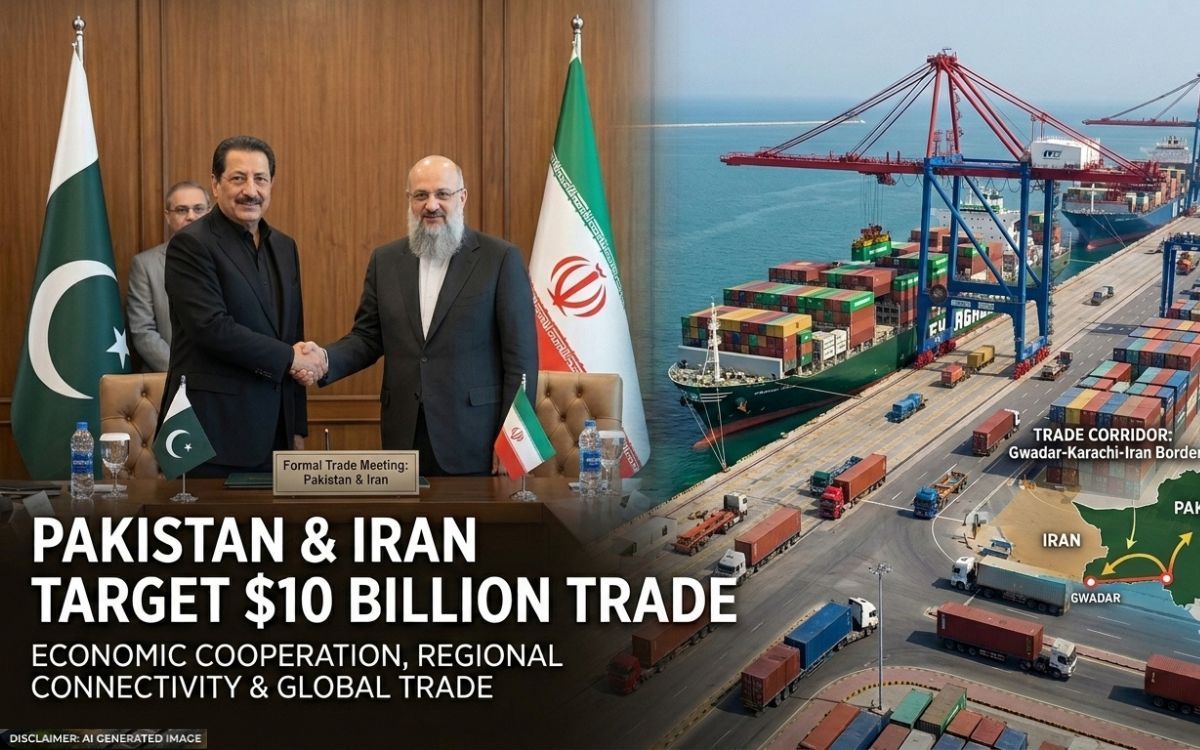
The meeting reaffirmed the important role of the private sector in expanding trade, with both governments agreeing to provide a stable and predictable business environment that encourages investment and commercial activity.
Iran also expressed interest in expanding regional logistics cooperation through Gwadar and Karachi ports, identifying them as strategic gateways for future trade. Iranian officials highlighted electricity trade, transport links, and regional connectivity as emerging areas of economic opportunity for both countries.
The discussions build on a series of recent initiatives aimed at improving cross-border connectivity. Earlier meetings between Pakistani and Iranian officials focused on expanding railway cooperation, including the revival of the Islamabad-Tehran-Istanbul (ITI) freight train and strengthening regional transport links.
Pakistan has also introduced several trade facilitation measures this year, allowing selected food and pharmaceutical exports to Iran through land routes without mandatory banking instruments. Additionally, exports to Central Asian Republics and Azerbaijan have been facilitated through Iranian territory.
To improve border management, Pakistan established a new customs station at Jeerak in Panjgur district, complementing the previously opened Kohak Cheedgi and Gabd Rimdan border crossings. In April, the government also notified six transit routes connecting Iranian trade with Pakistani seaports in Gwadar and Karachi, further reinforcing the country's role as a regional trade and logistics hub.
The latest developments reflect the shared commitment of Pakistan and Iran to deepen cooperation in trade, investment, transport, and connectivity while supporting broader regional economic integration.