Pakistan Approves Bonded Fuel Storage to Strengthen Energy Security
Pakistan’s Economic Coordination Committee (ECC) has approved a new policy allowing foreign petroleum suppliers to establish and operate Customs bonded storage facilities in the country at their own expense. The move is aimed at strengthening energy security, improving supply-chain resilience and providing greater flexibility for the storage, domestic sale and re-export of imported petroleum products.
The decision comes amid recent supply disruptions following the closure of the Strait of Hormuz, which prompted the government to examine vulnerabilities in Pakistan’s petroleum supply chain. The policy guidelines, which had been pending since June 2023, will come into force after formal ratification by the federal cabinet.
The ECC approved the proposal at a meeting chaired by Finance Minister Muhammad Aurangzeb. According to the government, the initiative forms part of broader efforts to strengthen key pillars of the country’s energy security architecture, including strategic petroleum reserves, greater supply resilience and the development of Customs bonded storage facilities.
Under the approved framework, foreign suppliers will be permitted to import crude oil, petrol, high-speed diesel, jet fuel, furnace oil, LPG and LNG through bonded storage facilities on their own accounts. All imported products will have to meet specifications approved by the Oil and Gas Regulatory Authority (Ogra). Goods subject to international sanctions or included in the Negative List of the Import Policy Order 2022 will remain outside the policy.
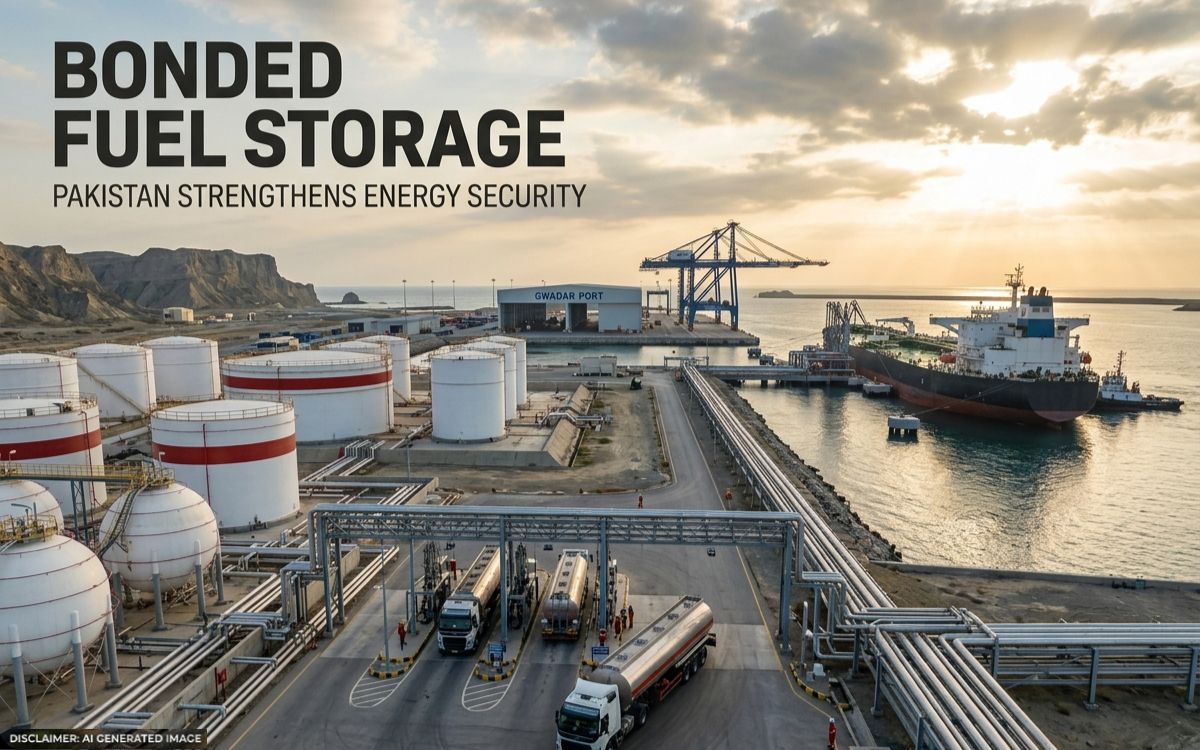
Foreign suppliers will be able to maintain bonded inventories at approved private and public storage terminals for both domestic sales and re-export. Approved locations will include Port Qasim Authority, KPT/Keamari, Hub and Gwadar Port, alongside other designated locations such as Mahmood Kot and Machike in Sheikhupura.
The framework will also allow foreign suppliers, through their consignees, to move bonded petroleum stocks from approved port-based facilities to inland storage locations through Pakistan’s national petroleum pipeline network. Such movements will not trigger customs duties or taxes, although the required goods declaration (GD) procedures will remain applicable.
The new arrangement will operate alongside the existing import system used by licensed oil marketing companies (OMCs) and refineries. Their current import rights and procedures will remain unchanged, ensuring that the bonded-storage mechanism does not replace the established petroleum import regime.
Foreign suppliers and consignees will have the option to develop dedicated storage facilities or use existing private and public bonded warehouses, subject to approval under the Customs Act, 1969 and requirements imposed by relevant port authorities. Each bonded facility will need to obtain a Customs licence and comply with applicable operational requirements.
For domestic sales, the OMC or refinery purchasing the bonded petroleum products will remain responsible for applicable sales tax, Customs duties and other charges at the time of ex-bonding. The foreign supplier and consignee will not be required to register with the Federal Board of Revenue (FBR) for sales tax purposes solely to operate under the scheme.
The policy also provides tax-neutral treatment for foreign suppliers and consignees in relation to bonded storage, blending, trading and re-export activities. Foreign suppliers will retain flexibility to negotiate commercial prices with local OMCs and refineries, while Ogra-regulated prices will apply to the onward sale of petroleum products within Pakistan by local purchasers.
The framework further establishes procedures for ownership transfers, electronic import documentation and Customs clearance. OMCs and refineries will file the relevant ex-bond GD, submit the required Electronic Import Form through their designated banks and pay applicable duties and taxes before taking delivery of the products.
Several technological and administrative changes will be required to implement the system. These include modifications to the Web-Based One Customs (WeBOC) platform and coordination between the State Bank of Pakistan and FBR to facilitate partial electronic import documentation and monitor quantities moved out of bonded storage.
The government will also retain the right to requisition bonded petroleum stocks during officially declared emergencies, including war, armed conflict, major natural disasters or a complete and documented collapse of domestic supply. Routine shortages, price fluctuations and geopolitical developments without actual supply disruption will not qualify for emergency requisitioning.
Requisitioned stocks will be compensated at the prevailing international market price, based on the relevant Platts assessment, with payment to be made in foreign currency within 15 days of delivery. The government must issue a formal requisition notice specifying the product, quantity and delivery point.
To improve monitoring, consignees will be required to report their bonded petroleum stocks to Ogra on a daily basis, including product grades and storage locations. The information will be maintained in a central regulatory database accessible to relevant authorities.
The new framework is expected to expand Pakistan’s strategic petroleum storage capacity while providing additional options for securing fuel supplies. The inclusion of Gwadar Port and other major maritime and inland locations could also strengthen the country’s logistics network and support a more flexible petroleum supply chain.