Pakistan to Route Up to 60% of Federal Imports Through Gwadar Port
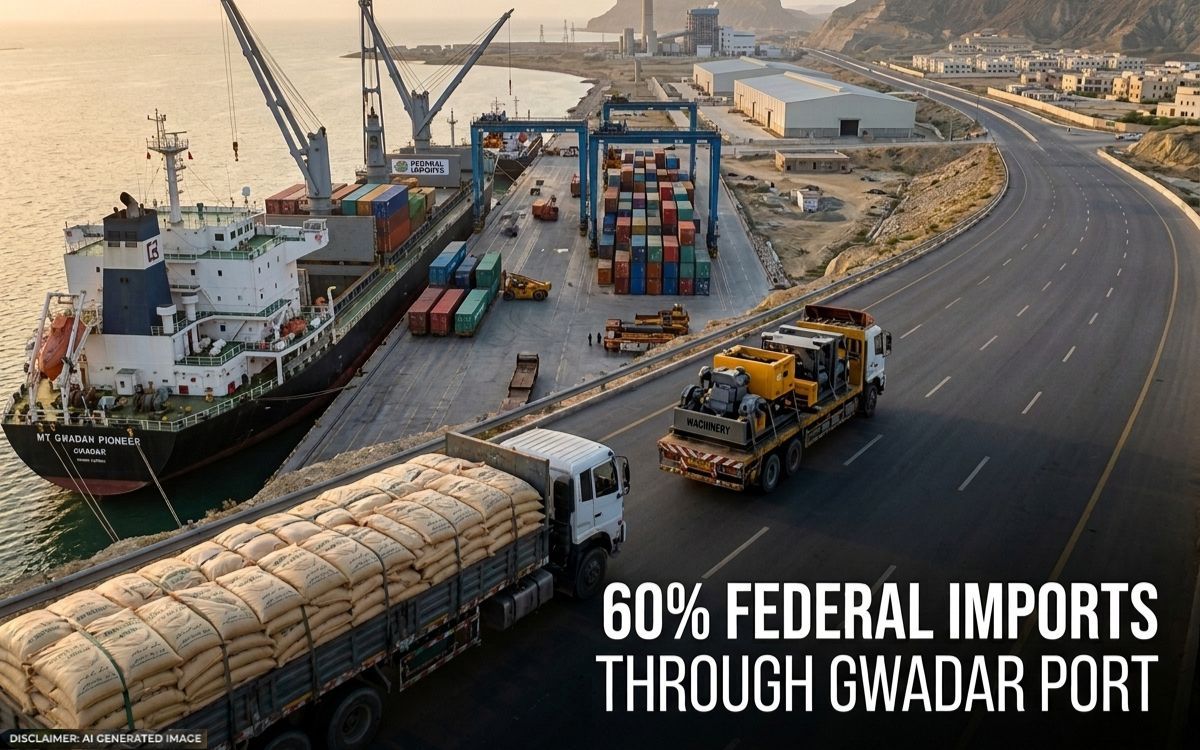
Prime Minister Shehbaz Sharif has ordered the federal government to route up to 60% of its official imports through Gwadar Port, including wheat, machinery and other goods, as part of efforts to increase activity and make the port fully operational.
Addressing the Balochistan National Workshop, the prime minister described Gwadar Port as a “magnificent harbor” for the region and highlighted its deep draft, which he said could accommodate vessels weighing up to 100,000 tons.
Prime Minister Shehbaz said he had issued instructions for federal government imports to be channelled through Gwadar Port, with the share potentially reaching 60%. He said the decision was aimed at increasing cargo activity and supporting the operationalisation of the strategically important port.
The move could provide a significant boost to Gwadar’s role in Pakistan’s maritime and logistics network by directing a larger share of government-related cargo through the port. Increased cargo volumes could also support associated transport, warehousing and logistics activities in the surrounding region.
The prime minister also linked the development of Gwadar and Balochistan with Pakistan’s broader economic progress. He said the country could not achieve sustainable development unless Balochistan benefited from the same economic opportunities and prosperity being pursued in other parts of Pakistan.
Addressing concerns raised by people in the province, Shehbaz Sharif said legitimate grievances would be heard and addressed through dialogue. He added that the federal government remained willing to engage with Balochistan repeatedly to resolve genuine concerns and support the province’s development.
During his address, the prime minister also highlighted measures being taken to reduce electricity costs for agricultural tube wells in Balochistan. The government has been working on a large-scale solarisation programme aimed at reducing the financial burden associated with supplying electricity to the province’s agricultural tube wells.
According to Shehbaz Sharif, the federal government had been facing substantial losses from the existing electricity supply arrangements for tube wells. In response, a plan costing approximately Rs70 billion was developed to convert between 20,000 and 22,000 tube wells from electricity to solar power.
Under the initiative, the Balochistan government offered to contribute 30% of the project cost, while the federal government allocated Rs40 billion towards the programme.
The prime minister said more than 20,000 tube wells had already been converted to solar energy, marking significant progress in the government’s efforts to reduce agricultural energy costs and improve the sustainability of irrigation in the province.
The Gwadar import directive and the tube-well solarisation programme form part of broader efforts to support Balochistan’s economic development. Increased use of Gwadar Port could strengthen its position within Pakistan’s trade and logistics infrastructure, while investment in renewable energy could help reduce operating costs for the province’s agricultural sector.
By increasing government cargo through Gwadar, the federal government is also seeking to generate greater commercial activity around the port and encourage wider use of its maritime and logistics infrastructure.