Pakistan Moves to Become Regional Petroleum Storage and Trading Hub
Pakistan is preparing to open its petroleum storage sector to international oil suppliers through a proposed customs-bonded framework that would allow foreign companies to maintain inventories in the country for both local sales and re-exports. The initiative aims to position Pakistan as a regional petroleum storage and trading hub while strengthening energy security and supply-chain resilience.
The Policy Guideline on Import on Foreign Suppliers’ Account through Customs Bonded Storage Facilities-2026 has been submitted by the Petroleum Division to the Economic Coordination Committee (ECC) for approval. The 168-page policy covers key energy commodities, including crude oil of all grades, motor spirit, high-speed diesel, jet fuel, fuel oil, LPG and LNG.
Under the proposed framework, international suppliers would be able to bring petroleum products into Pakistan and store them under customs bond without immediately becoming liable for domestic duties and taxes. This would give suppliers greater flexibility to decide whether to sell their inventories in the Pakistani market or re-export them to other destinations.
Bonded storage is proposed at strategic locations including Port Qasim, KPT/Kemari, Hub, Gwadar, Mahmood Kot and Machike Sheikhupura, subject to applicable regulatory, licensing and safety approvals.
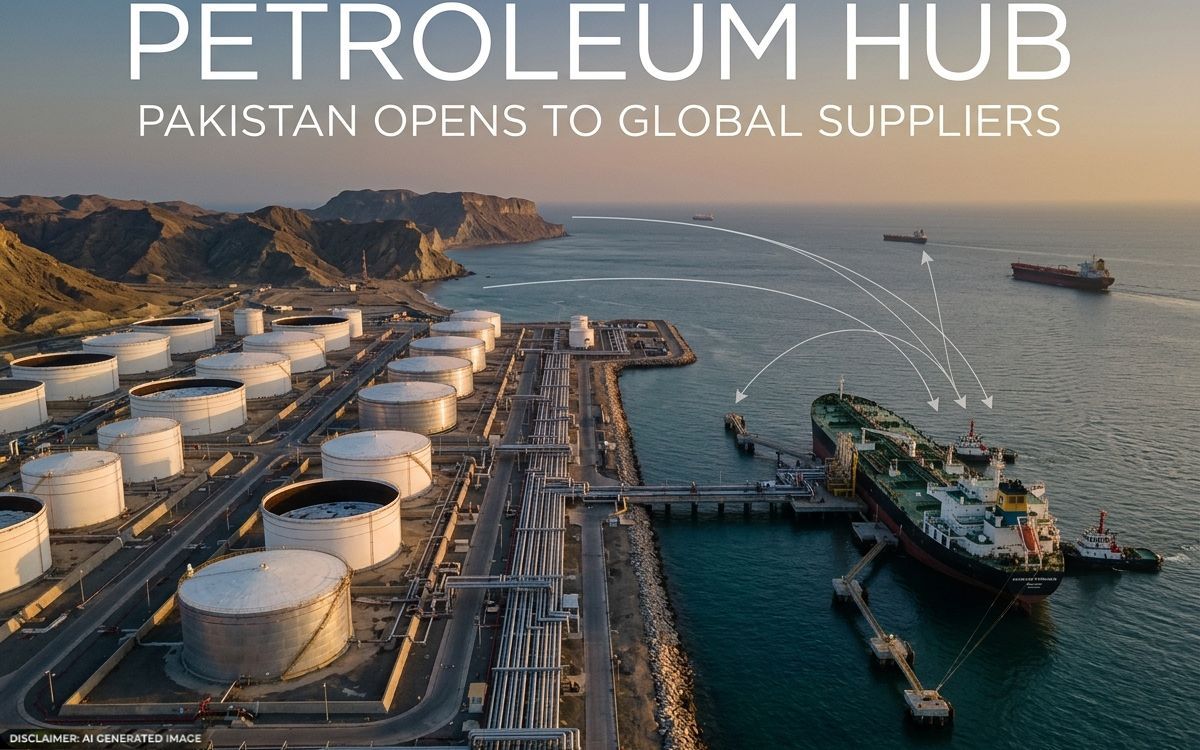
The framework could be particularly attractive to foreign suppliers from the Middle East, including Kuwait and Saudi Arabia. Petroleum cargo could be imported into bonded storage on the supplier’s account, avoiding the need for an immediate domestic sale or foreign-exchange remittance at the point of entry.
Foreign suppliers would be able to participate through a registered liaison office or a locally established branch or incorporated company acting as their consignee. The consignee could either develop dedicated storage facilities or use licensed public and private bonded storage infrastructure.
This arrangement could strengthen Pakistan’s position beyond that of a conventional destination market, potentially turning the country into a strategic storage and trading point for regional petroleum flows. International suppliers could bring products into Pakistan, hold them under customs bond and later sell them domestically when market conditions are favourable or redirect them to overseas markets.
The proposed policy could also have a significant impact on Pakistan’s energy security. Rather than depending exclusively on petroleum cargoes imported for immediate consumption, the country could maintain larger volumes of petroleum stocks within its territory under a bonded regime. These inventories could provide additional flexibility during disruptions in international supply chains.
The framework would also allow bonded petroleum to move through Pakistan’s national pipeline network from port-based locations to approved inland storage facilities, including Mahmood Kot and Machike Sheikhupura, without triggering duties or taxes simply because the products are transported while remaining under bond.